SEO3 Nov 202615 min read
How to Get More Organic Traffic to Your Website
Want more visitors from Google without paying for every click? Discover practical SEO strategies to increase organic website traffic through keyword research content optimization technical SEO link building and search performance improvements.
By Ayesh Zubair
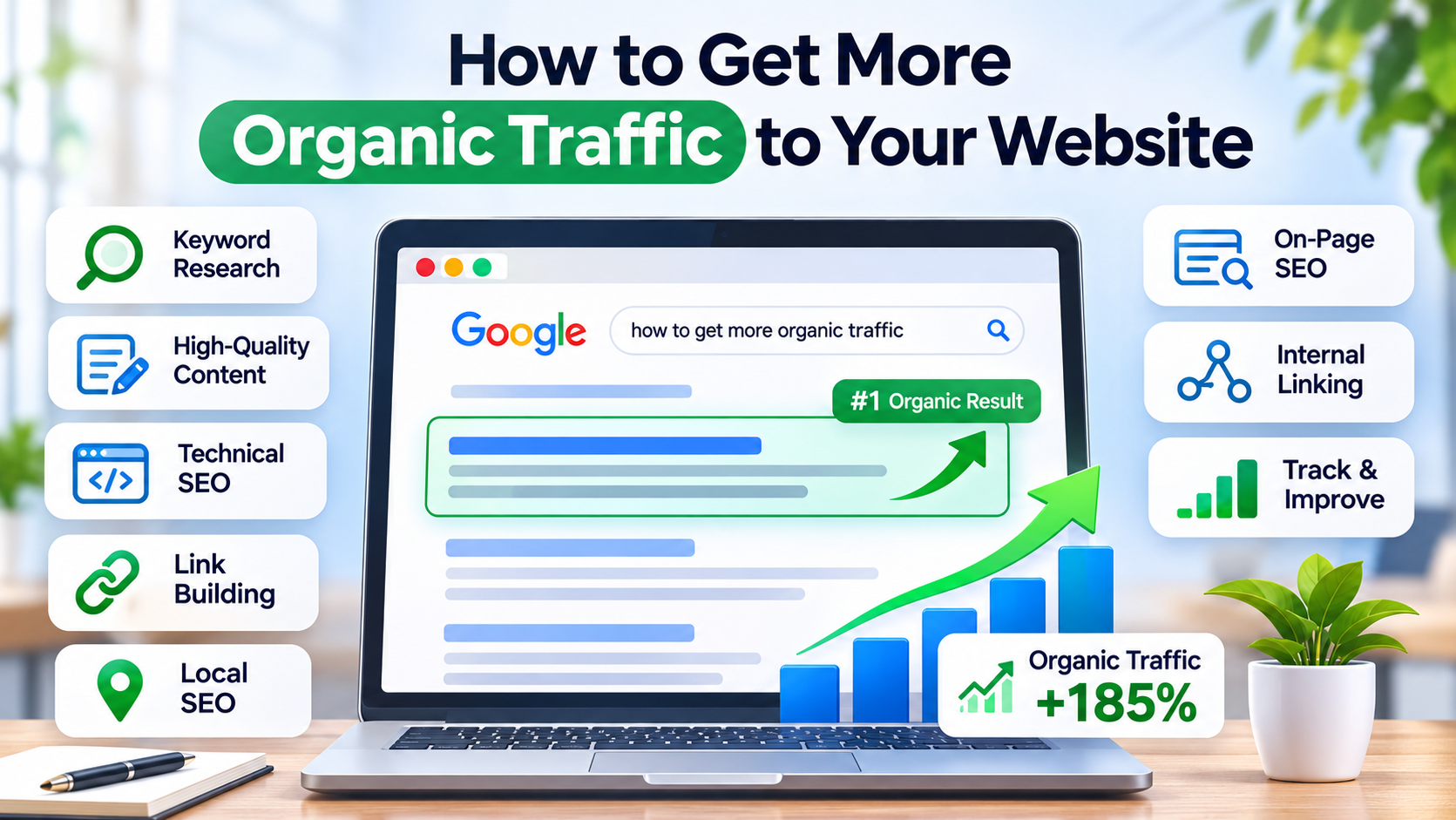
Getting consistent visitors to your website is one of the biggest challenges for businesses operating online. Whether you run a small business, an eCommerce store, or a professional services website, attracting the right audience is essential for generating leads, increasing sales, and building brand awareness.
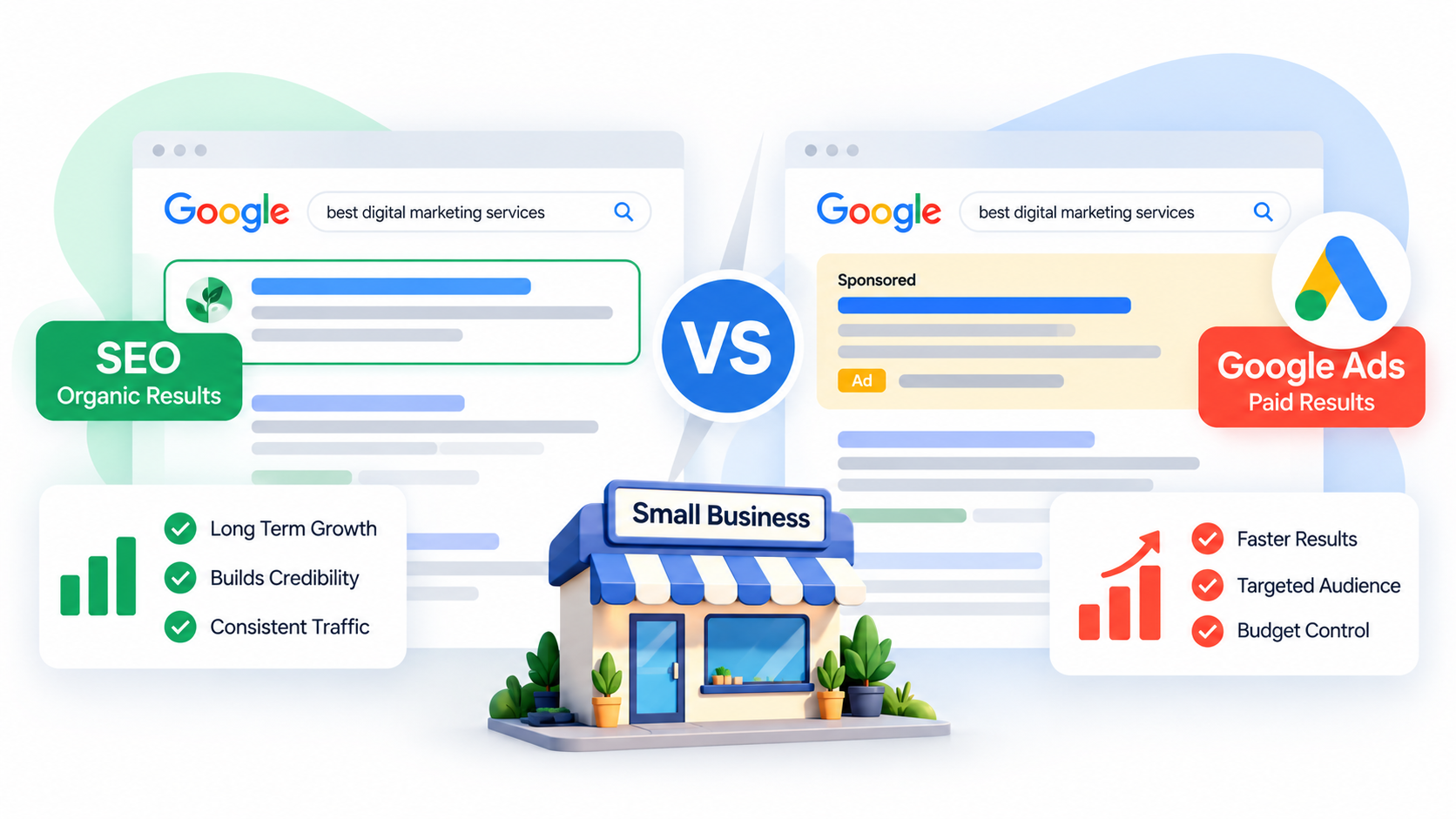
Organic traffic is particularly valuable because it brings visitors to your website through unpaid search engine results. Instead of paying for every click through advertising, you invest in improving your website's visibility so potential customers can discover your content when searching for relevant information, products, or services.
However, increasing organic traffic requires more than publishing blog posts or adding keywords to website pages. A successful SEO strategy involves keyword research, content optimization, technical improvements, internal linking, link building, and continuous performance analysis.
In this guide, we explain how to get more organic traffic to your website using practical SEO strategies that support sustainable growth.
1. Start With Proper Keyword Research
Keyword research is the foundation of an effective SEO strategy.
Before creating content or optimizing existing pages, you need to understand what your target audience searches for on Google.
The objective is to identify relevant keywords that match your website's services, products, and audience needs.
For example, a digital marketing agency may target keywords such as:
- Digital marketing services
- SEO services for small businesses
- Google Ads management services
- PPC management company
- Social media marketing services
- How to improve website rankings
These keywords represent different search intents. Some users are looking for professional services, while others want information or practical guidance.
Focus on Search Intent
Search intent refers to the reason behind a user's search query.
Understanding it helps you create content that matches what people actually want to find.
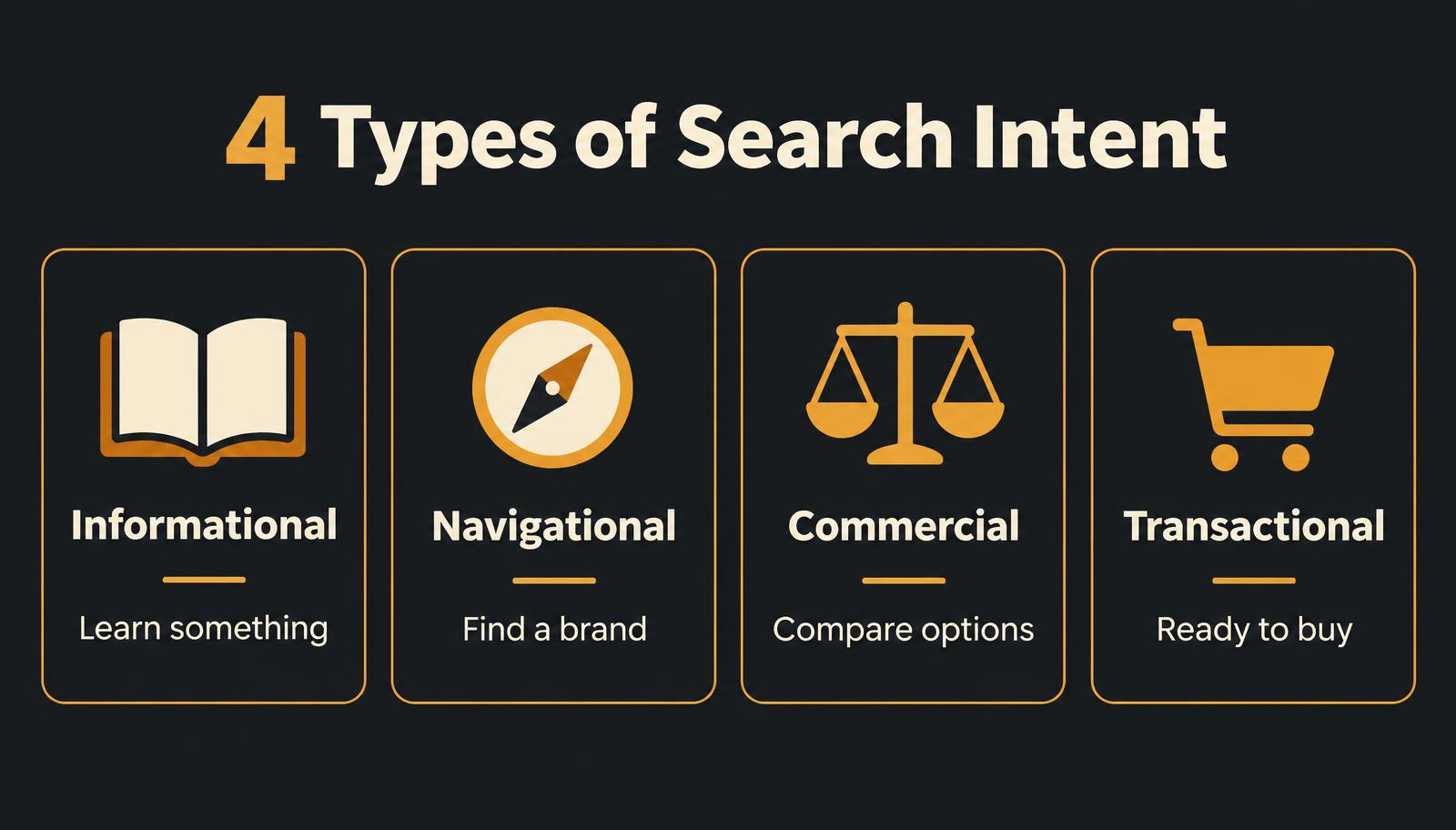
There are four common types of search intent:
Informational Intent
Users want to learn something or find an answer.
Examples:
- How does SEO work?
- How to increase website traffic
- What is technical SEO?
Navigational Intent
Users are looking for a specific website or brand.
Examples:
- Google Search Console
- Semrush login
- Ahrefs website
Commercial Investigation
Users are comparing products or services before making a decision.
Examples:
- Best SEO tools
- SEO agency comparison
- Google Ads vs SEO
Transactional Intent
Users are ready to take action or purchase something.
Examples:
- Hire an SEO expert
- Buy SEO software
- Google Ads management services
Targeting a combination of these search intents can help your website attract visitors at different stages of the customer journey.
Use SEO Tools for Keyword Research
Tools such as Google Keyword Planner, Google Search Console, Semrush, and Ahrefs can help identify keyword opportunities.
Analyze:
- Monthly search volume
- Keyword difficulty
- Search intent
- Keyword variations
- Competitor rankings
- Commercial relevance
Do not choose keywords based on search volume alone. A keyword with lower search volume but stronger buying intent may generate more valuable business enquiries.
2. Create High-Quality SEO Content
Content is one of the most important elements of organic search growth.
Google aims to provide users with helpful and relevant results. Your website should therefore publish content that genuinely addresses audience questions and provides useful information.
Instead of creating articles simply to target keywords, focus on solving problems and covering topics in sufficient depth.
Identify Topics Your Audience Searches For
Start by understanding the questions and challenges your potential customers face.
For example, a website offering SEO services could publish articles about:
- How to get more organic traffic
- How to improve Google rankings
- Common technical SEO mistakes
- How to conduct keyword research
- SEO vs Google Ads
- How to optimize landing pages
These topics can attract visitors who are researching digital marketing and may eventually become potential customers.
Create Helpful and Original Content
Your articles should provide useful information rather than repeat the same points found across competing websites.
Consider including:
- Practical examples
- Step-by-step instructions
- Original insights
- Relevant statistics with credible sources
- Screenshots where useful
- Real business experiences
- Actionable recommendations
Content should be accurate, easy to understand, and written with the intended audience in mind.
AI tools can assist with research and drafting, but automatically publishing large volumes of generic or unverified content is not a reliable SEO strategy. Human review, originality, accuracy, and genuine value remain important.
Publish Consistently
A consistent publishing schedule helps you expand your website's coverage of relevant topics.
However, publishing more articles does not automatically produce better rankings.
Prioritize content quality and topical relevance over publishing frequency.
3. Optimize Your Website's On-Page SEO
On-page SEO involves optimizing individual website pages so search engines and users can better understand their content.
Even valuable content may struggle to perform if its structure and relevance are unclear.
Focus on these important elements.
Optimize Title Tags
Your title tag helps communicate the subject of a page to search engines and potential visitors.
Include your primary keyword naturally and make the title relevant to the actual page content.
For example:
Primary Keyword: How to Get More Organic Traffic
Suggested Title: How to Get More Organic Traffic to Your Website
Avoid keyword stuffing and unnecessarily long titles.
Write Compelling Meta Descriptions
Meta descriptions summarize the content of a webpage and may appear in search results.
A good description should:
- Explain what the page offers
- Include the primary topic naturally
- Encourage relevant users to visit
- Accurately represent the page content
Google may generate a different search snippet depending on the query, so writing a meta description does not guarantee that it will always be displayed.
Use Proper Heading Structure
Organize your content using descriptive headings.
Use:
- H1 for the main page heading
- H2 for major sections
- H3 for supporting subsections
Headings should improve readability and help users navigate the content.
Optimize URLs
Use short and descriptive URLs that clearly communicate the subject of the page.
For example:
example.com/how-to-improve-organic-trafficAvoid unnecessarily complicated URLs and excessive keyword repetition.
Optimize Images
Images can improve user experience and explain complex information.
Follow these practices:
- Use relevant images.
- Compress files to reduce loading time.
- Use descriptive file names.
- Add meaningful alternative text.
- Choose suitable image dimensions and formats.
Image optimization supports accessibility and helps search engines understand image content.
4. Improve Your Website's Technical SEO
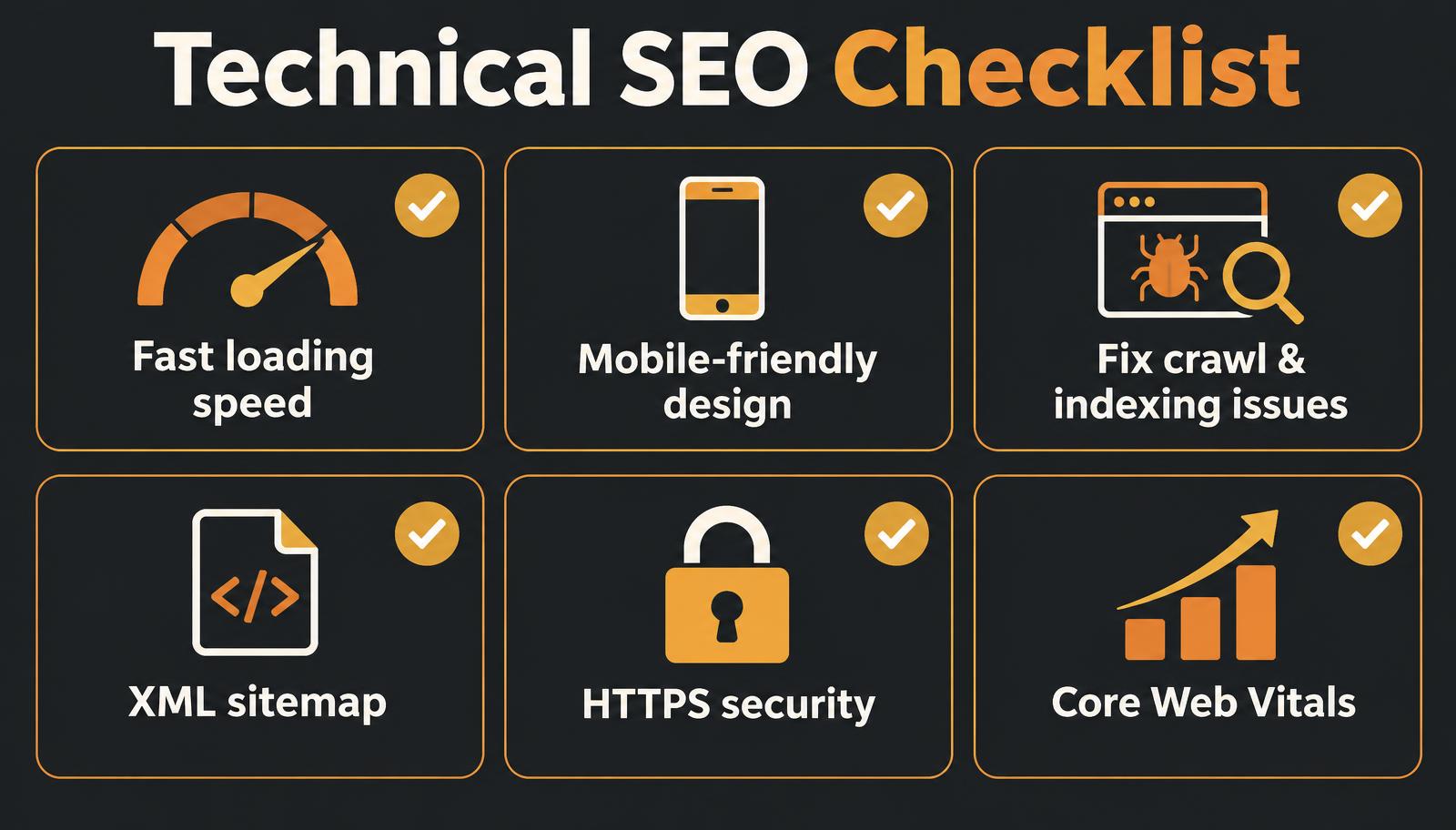
Technical SEO helps search engines crawl, understand, and index your website.
A website may have excellent content but still struggle with organic visibility if important technical issues prevent search engines from accessing its pages.
Improve Website Loading Speed
Website performance affects user experience.
Slow-loading pages can frustrate visitors and may contribute to poor engagement.
Consider:
- Compressing large images
- Reducing unnecessary scripts
- Using browser caching
- Choosing reliable hosting
- Implementing efficient code
- Using a content delivery network where appropriate
Google's Core Web Vitals provide useful measurements of loading performance, responsiveness, and visual stability.
Make Your Website Mobile-Friendly
Many users access websites through smartphones and tablets.
Ensure that your website:
- Uses responsive design
- Displays content correctly on mobile screens
- Has readable text
- Provides easy navigation
- Uses accessible buttons and forms
- Avoids unnecessary pop-ups
Google primarily uses the mobile version of website content for indexing, so mobile usability should be part of your SEO strategy.
Fix Crawl and Indexing Issues
Use Google Search Console to identify technical issues affecting your website.
Review:
- Indexing reports
- Page availability
- Robots.txt configuration
- XML sitemap status
- Canonical tags
- Redirects
- Broken internal links
- Duplicate URL issues
Make sure important pages are accessible to search engines and can be indexed when appropriate.
Implement Structured Data
Structured data helps search engines understand specific information on your webpages.
Depending on your website, relevant schema types may include:
- Organization
- Product
- Article
- Breadcrumb
- LocalBusiness
- Event
Use only schema markup that accurately represents visible page content and follows Google's structured data guidelines.
Structured data can make pages eligible for certain search enhancements, but it does not guarantee rich results or higher rankings.
5. Build a Strong Internal Linking Structure
Internal linking connects related pages within your website.
It helps visitors discover additional content and gives search engines more context about the relationship between your pages.
For example, a blog post about keyword research can link to related articles about:
- On-page SEO
- Technical SEO
- SEO content strategy
- Google Search Console
- Organic traffic growth
You should also link relevant blog posts to important service pages.
Internal Linking Best Practices
- Use descriptive anchor text.
- Link to relevant pages.
- Avoid excessive linking.
- Make important pages easy to discover.
- Fix broken internal links.
- Link from relevant high-performing pages to important content.
A well-organized internal linking structure can improve website navigation and help distribute internal link signals across relevant pages.
6. Build Quality Backlinks
Backlinks are links from other websites pointing to your website.
They can help search engines discover content and provide context about a website's relevance and authority.
However, not all backlinks provide the same value.
A link from a relevant and trusted website may be more useful than multiple links from unrelated or low-quality websites.
Effective Link Building Strategies
Guest Posting
Contribute valuable articles to relevant websites and include a natural reference to your website when appropriate.
Digital PR
Create useful research, reports, or resources that journalists and industry websites may want to reference.
Resource Link Building
Publish helpful resources such as guides, templates, research, and tools that other websites may find worth linking to.
Industry Outreach
Build relationships with relevant publishers, bloggers, and businesses in your industry.
Unlinked Brand Mentions
Identify websites mentioning your brand without linking to it and consider requesting a relevant link where appropriate.
Avoid buying manipulative links or participating in link schemes designed primarily to influence search rankings. Focus on earning relevant links through useful content and genuine relationships.
7. Publish Topic Clusters to Build Topical Coverage
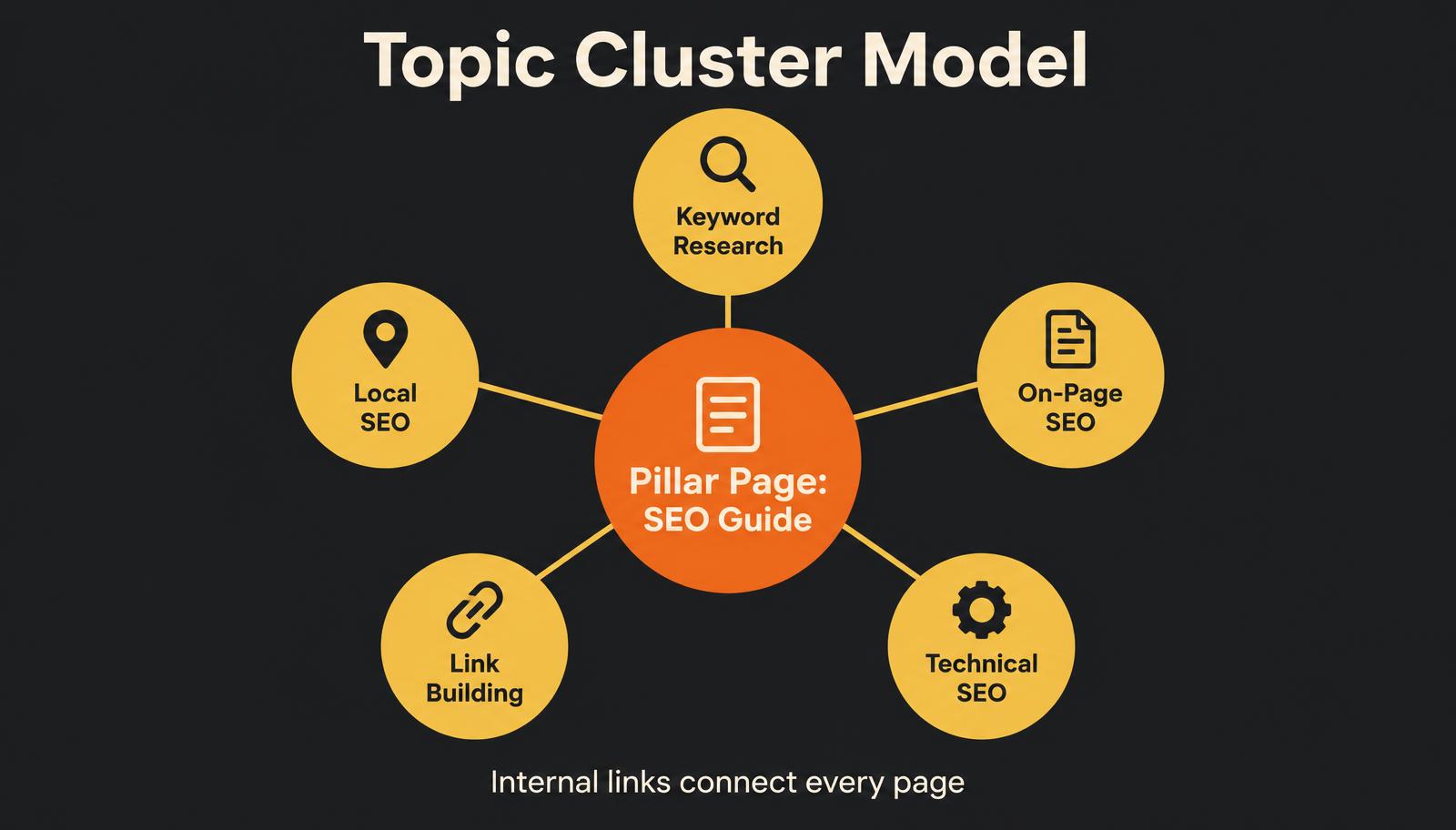
A topic cluster is a content strategy in which multiple related articles support a central topic.
Instead of publishing disconnected blog posts, organize your content around the main subjects your business wants to cover.
For example, a website focused on SEO services could create a central pillar page about SEO.
Supporting articles could include:
- Keyword Research Guide
- Technical SEO Checklist
- On-Page SEO Best Practices
- Link Building Strategies
- Local SEO Guide
- How to Improve Organic Rankings
Each supporting article can link to the relevant pillar page and other related resources.
This structure helps users explore related information and makes your website's content organization clearer.
However, topic clusters do not automatically improve rankings. Each article should serve a distinct purpose and provide useful information.
8. Optimize Your Website for Local SEO
If your business serves customers in specific locations, local SEO can help you attract relevant visitors and enquiries.
For example, a digital marketing agency targeting customers in Lahore may want to appear for searches such as:
- Digital marketing agency in Lahore
- SEO services in Lahore
- Google Ads expert in Lahore
- PPC management services Lahore
Improve Your Google Business Profile
If your business is eligible for a Google Business Profile, complete and maintain it with accurate information.
Include:
- Business name
- Address or service area
- Phone number
- Website
- Business hours
- Relevant categories
- Services
- Genuine customer reviews
Create Location-Specific Pages
If you serve multiple locations, you can create dedicated pages explaining your services in each area.
Each page should contain genuinely useful and location-relevant information.
Avoid creating dozens of nearly identical city pages with only the location name changed.
Collect Genuine Customer Reviews
Encourage satisfied customers to share honest feedback about their experiences.
Respond professionally to reviews and use feedback to improve your services.
Local SEO can help businesses attract customers who are searching for nearby products and services.
9. Optimize Existing Content Instead of Only Publishing New Articles
Many websites focus entirely on creating new content while ignoring articles that already receive impressions or traffic.
Updating existing pages can be an effective way to improve organic performance.
Use Google Search Console to identify pages that:
- Receive impressions but have low click-through rates
- Rank for relevant keywords but have weak positions
- Have declining organic clicks
- Attract traffic but generate few enquiries
- Contain outdated information
How to Improve Existing Articles
- Update outdated information.
- Add missing sections.
- Improve title tags and meta descriptions.
- Include relevant supporting keywords naturally.
- Improve internal links.
- Replace broken links.
- Add useful examples and visuals.
- Remove unnecessary or repetitive content.
Do not update content merely to change its publication date. Make meaningful improvements that benefit users.
10. Use Google Search Console and Analytics to Measure Results
SEO decisions should be based on reliable performance data.
Google Search Console and Google Analytics 4 provide different insights into how people discover and interact with your website.
Google Search Console
Use Search Console to monitor:
- Total organic clicks
- Search impressions
- Average position
- Click-through rate
- Search queries
- Indexed pages
- Technical indexing issues
The Performance report can help identify keywords that already generate impressions and reveal opportunities for further optimization.
Google Analytics 4
GA4 helps you understand what visitors do after arriving on your website.
Monitor:
- Organic landing pages
- Engaged sessions
- Engagement rate
- Lead form submissions
- Purchases
- Conversion events
- Traffic sources
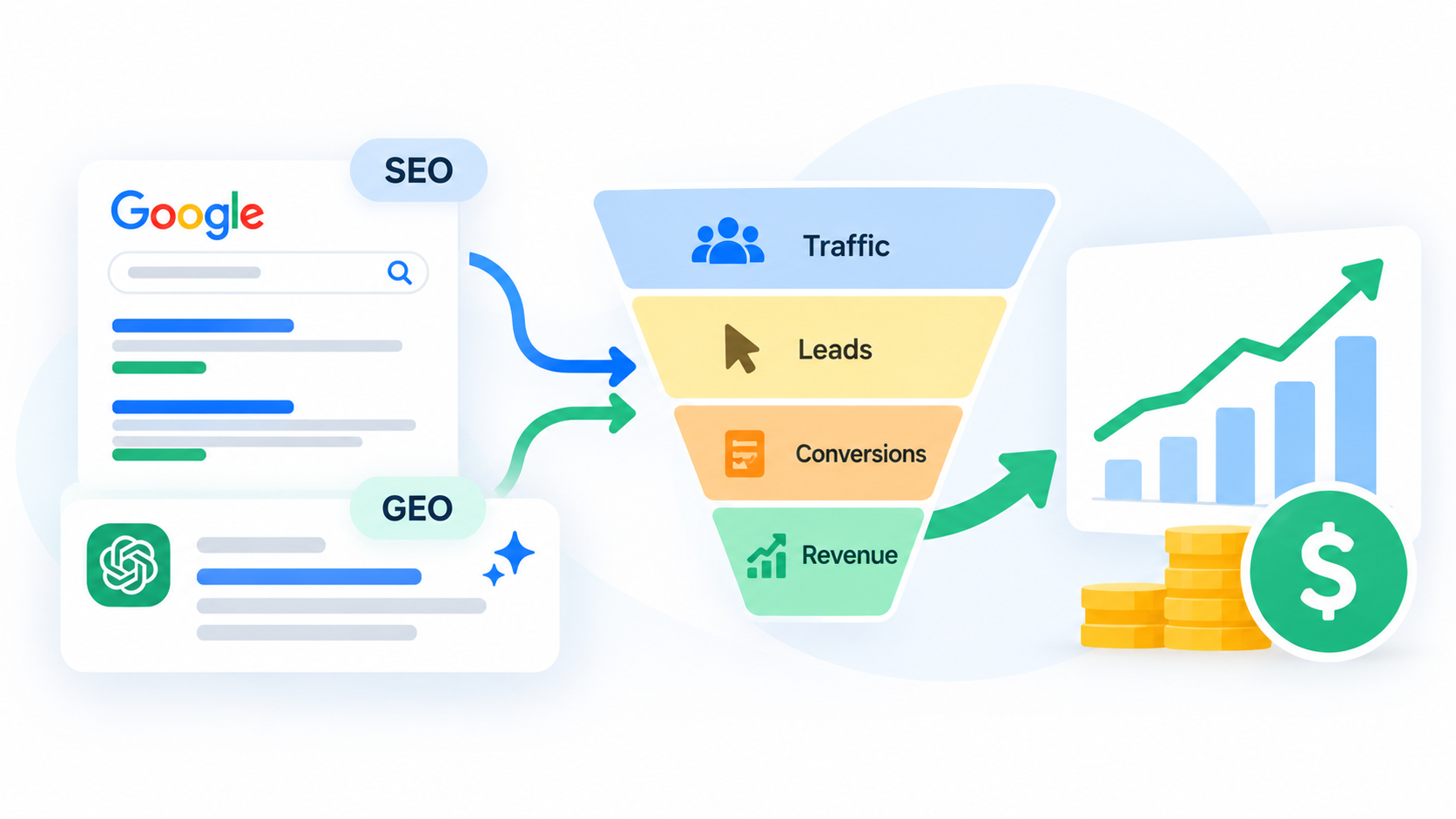
Connect your organic traffic data with business outcomes.
For example, a blog post generating 5,000 visits may not be as commercially valuable as a service page generating 500 visits and 20 qualified enquiries.
The goal should be to grow relevant organic traffic that contributes to business objectives.
11. Improve Content for AI Search Visibility
Search experiences are evolving as AI-powered tools become more widely used.
Users can now discover brands and information through AI-generated answers and conversational search experiences.
Although traditional SEO remains important, businesses can also improve how clearly their information is presented across the web.
Consider these practices:
Publish Accurate and Helpful Information
Create content that directly answers relevant questions and provides reliable explanations.
Use Clear Content Structure
Organize articles with descriptive headings, concise explanations, and useful examples.
Demonstrate Experience and Expertise
Include genuine business experience, original insights, relevant credentials, and credible supporting information.
Maintain Consistent Brand Information
Keep your business details, services, and contact information accurate across your website and relevant platforms.
Build Genuine Brand Authority
Earn relevant mentions, reviews, and references from credible sources within your industry.
AI search visibility should be treated as an additional opportunity rather than a replacement for traditional SEO.
12. Common SEO Mistakes That Can Limit Organic Traffic
Even businesses investing in SEO may struggle to increase organic traffic because of avoidable mistakes.
Here are some common issues to address.
Targeting Keywords Without Understanding Search Intent
A page may contain the correct keyword but still fail to satisfy what users are looking for.
Publishing Thin or Repetitive Content
Creating multiple pages with little original value can weaken the overall usefulness of your website.
Ignoring Technical SEO
Crawlability, indexing, mobile usability, and website performance should be monitored regularly.
Building Irrelevant Backlinks
Low-quality link building practices can create risks and do not provide a reliable foundation for sustainable SEO.
Ignoring Internal Linking
Poorly connected pages can make it harder for visitors and search engines to discover important content.
Focusing Only on Rankings
Ranking improvements are useful, but organic traffic quality, enquiries, and sales are more meaningful business indicators.
Expecting Immediate Results
SEO takes time and requires ongoing work. Results vary depending on competition, website history, content quality, and other factors.
13. How Long Does It Take to Increase Organic Traffic?
There is no fixed timeline for achieving organic traffic growth.
Some improvements, such as fixing indexing issues or optimizing existing pages, may produce relatively quick benefits.
However, building visibility for competitive keywords and establishing website authority generally requires consistent effort over a longer period.
Your results may depend on:
- Website age and history
- Existing organic visibility
- Keyword competition
- Technical website condition
- Content quality
- Backlink profile
- Industry competitiveness
- Search engine updates
Instead of expecting immediate results, establish realistic SEO goals and review progress regularly.
Measure improvements in impressions, relevant keyword rankings, organic clicks, qualified leads, and conversions.
Final Thoughts
Getting more organic traffic to your website requires a combination of relevant content, effective keyword research, strong on-page SEO, technical optimization, internal linking, and quality backlinks.
Simply publishing more articles or targeting high-volume keywords is not enough. Your website needs to provide useful information, satisfy search intent, and deliver a good experience to visitors.
Start by identifying the keywords your audience searches for, improve your most important pages, fix technical issues, and publish content that addresses genuine customer needs.
Use Google Search Console and Google Analytics to monitor performance and identify opportunities for improvement.
Most importantly, focus on attracting the right visitors rather than increasing traffic numbers alone.
A successful organic growth strategy should help your website become more visible, attract qualified prospects, and generate measurable business results over time.
Want to grow your website's organic traffic? Explore Scalviro's SEO services and build a search engine optimization strategy focused on long-term visibility, qualified traffic, and business growth.

About the author
Ayesh Zubair
Founder of Scalviro · Digital Marketer
Ayesh Zubair is the founder of Scalviro, providing SEO, Google Ads and Meta Ads management. He writes about search visibility, paid advertising and digital marketing strategies for businesses.