SEO27 Oct 20269 min read
Semrush Confirms Poisoned Google Search Results: What SEOs Need to Know
Semrush confirms inaccurate Google search results are affecting rank-tracking tools. Learn what poisoned SERPs mean for SEO reporting keyword rankings and how to verify ranking changes.
By Ayesh Zubair
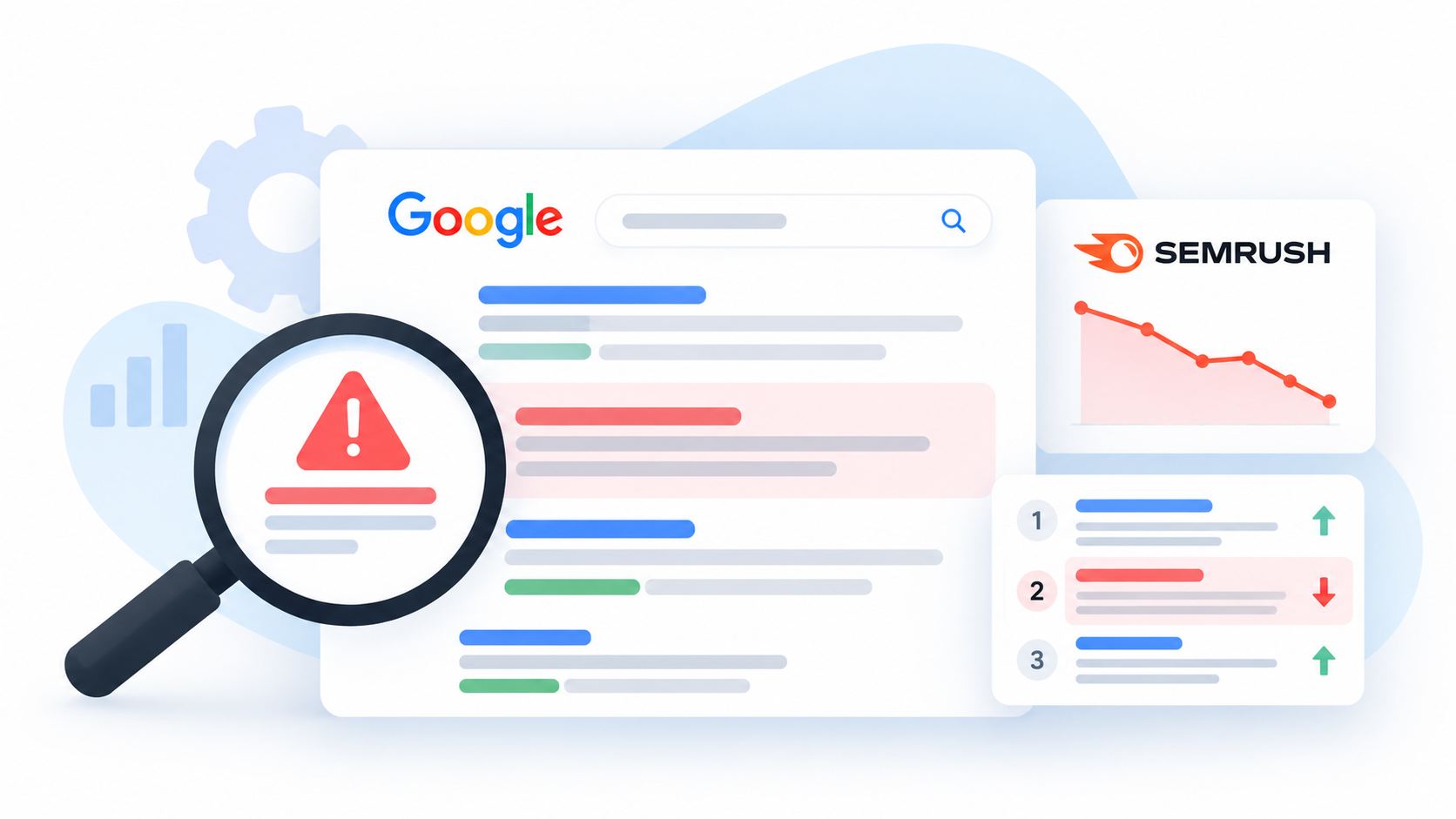
SEO professionals rely on accurate ranking data to understand search visibility, monitor keyword performance and report progress to clients. However, a recent issue involving Google's search results has raised concerns about the reliability of third-party rank-tracking tools.
Semrush has confirmed that it has been seeing what the industry calls "poisoned SERPs" — search engine results pages that appear normal but contain inaccurate or unexpected listings when collected by automated tracking systems.
The issue matters because SEO professionals may interpret an inaccurate ranking report as a genuine loss of visibility. Before changing a campaign strategy or reporting a significant ranking drop, marketers need to understand how these results can affect their data.
According to Search Engine Land, Semrush has introduced additional checks to filter and verify results while continuing to adapt to Google's changing behavior.
What Are Poisoned Google Search Results?
A search engine results page, commonly called a SERP, displays the results Google returns for a particular query.
SEO rank-tracking tools collect these results to determine where websites appear for specific keywords. They use this information to monitor ranking changes, compare competitors and measure search visibility over time.
Poisoned SERPs are different from ordinary ranking fluctuations.
In the reported issue, Google appears to be returning complete-looking search results pages to certain automated data collection systems, but some listings differ from the websites normally associated with those queries.
The pages may look legitimate, making the problem difficult to identify through a simple automated check.
For example, imagine a website that consistently ranks in the top five positions for an important keyword. A rank-tracking tool might suddenly report that the website has disappeared from the first page.
If the collected SERP contains substituted results rather than the results users would ordinarily see, the reported ranking loss may not reflect an actual change in organic search visibility.
This is why SEO professionals need to distinguish between genuine ranking movements and potentially unreliable data.
What Has Semrush Confirmed?
Semrush has acknowledged that it observed the issue and implemented additional checks to improve the accuracy of its ranking data.
The company stated that it had been seeing inaccurate Google results since late summer 2026. After identifying the issue, its team introduced further validation measures to filter and double-check the results it returns.
Semrush also indicated that the impact on its users' tracked rankings had been limited and that its service had not experienced interruptions.
However, the company acknowledged that individual inconsistencies could still occur, particularly beyond the first page of search results.
This distinction is important. Semrush's statement does not mean that every ranking report is unreliable. Instead, it highlights the need for continued validation when ranking data appears inconsistent with other performance indicators.
Other SEO data providers have also reported problems with Google's results, suggesting that this is not necessarily limited to one tracking platform.
Why Is Google Returning Inaccurate Results to Rank Trackers?
The precise reason for Google's behavior has not been officially established.
One explanation discussed by industry observers is that Google may be attempting to limit automated scraping of its search results. Automated systems collect search data at scale, and Google has an interest in controlling how its results are accessed.
However, this explanation remains an interpretation of the reported behavior rather than a confirmed statement from Google.
SEO rank trackers may be affected because they also rely on automated requests to collect search results. As a result, systems intended to gather ranking data could encounter the same restrictions or unusual responses.
It is important not to assume that Google is deliberately targeting SEO professionals or that every unexpected ranking result has been affected by this issue.
Actual algorithm changes, technical problems and genuine competitive movements can also cause ranking fluctuations.
How Poisoned SERPs Can Affect SEO Reporting
Inaccurate ranking data can create several challenges for SEO teams, agencies and website owners.
1. False Keyword Ranking Drops
A tracking tool might report that a keyword has dropped from position three to position 25 or has disappeared from the tracked results.
If the underlying SERP is inaccurate, the reported change may not reflect the website's actual search performance.
Acting on such a report without verification could lead marketers to investigate the wrong problem or make unnecessary changes to successful pages.
2. Misleading Competitor Analysis
SEO professionals use rank-tracking tools to identify competing websites and compare keyword positions.
If collected results contain unexpected listings, competitor reports may show websites gaining or losing visibility when those changes do not reflect normal search results.
This can make competitive analysis less reliable until the affected data is verified.
3. Inaccurate Client Reports
Agencies often use keyword ranking reports to communicate progress to clients.
An unexplained ranking decline can create unnecessary concern, especially when it affects important commercial keywords.
Before presenting a sudden decline as a confirmed SEO issue, agencies should compare ranking data with other sources and explain any uncertainty.
4. Poor Optimization Decisions
If marketers believe that a website has lost rankings, they may change page titles, rewrite content, alter internal links or modify their backlink strategy unnecessarily.
These actions can consume time and introduce new variables without addressing the actual cause of the reported decline.
The better approach is to investigate the evidence before making major optimization decisions.
How to Verify Whether a Ranking Drop Is Real
SEO professionals should use several sources of information rather than relying exclusively on one rank-tracking tool.
Step 1: Check Google Search Console
Google Search Console provides data about impressions, clicks, average position and search queries for a website.
If a rank tracker reports a dramatic ranking loss but Search Console continues to show broadly consistent impressions and clicks for the affected queries, the discrepancy deserves further investigation.
However, Search Console data is aggregated and can fluctuate. Its average position is not a direct replacement for a precise, location-specific ranking measurement.
Compare similar date ranges and consider changes in search demand before drawing conclusions.
Step 2: Compare Multiple Rank-Tracking Sources
Check whether another reputable tool reports the same ranking movement.
If several tools show a similar decline, that may support the possibility of a genuine change, although different providers can collect and process data differently.
If only one tool reports a substantial drop, investigate its data before taking action.
Agreement between tools is useful evidence, but it is not an absolute guarantee of accuracy.
Step 3: Review Organic Traffic Trends
Analyze Google Analytics 4 or your other analytics platform to determine whether organic search sessions have changed.
A substantial ranking decline may affect traffic, particularly for high-volume keywords. However, traffic can also change because of seasonality, search demand, SERP features or changes in click-through rate.
Use traffic trends as supporting evidence rather than treating them as a definitive ranking measurement.
Step 4: Check the Actual Search Results
Where appropriate, manually inspect Google results for the affected query using the relevant country, location and device context.
Remember that results can vary by location, personalization and device. A manual search is therefore a useful diagnostic check rather than a perfect substitute for standardized rank tracking.
Step 5: Look for Technical or Algorithmic Issues
Before attributing a ranking decline to poisoned SERPs, review other possible causes.
Check whether important pages remain indexed, whether the website has experienced technical errors and whether major content or website changes occurred around the same time.
Also consider confirmed Google algorithm updates and changes in competitors' content.
A proper diagnosis should consider multiple explanations rather than assuming that every unusual ranking report is inaccurate.
What Should SEO Agencies Do Differently?
Agencies do not need to abandon rank-tracking tools. Instead, they should improve how they validate and communicate ranking data.
Avoid Making Decisions Based on One Metric
Keyword positions are useful, but they do not fully represent SEO performance.
Track organic clicks, impressions, qualified traffic, conversions and revenue alongside rankings wherever possible.
This broader view helps determine whether a reported ranking change is affecting the outcomes that matter to the business.
Investigate Sudden Ranking Changes
Create a process for investigating unexpected ranking movements before implementing major changes.
For example, if several valuable keywords suddenly disappear from a tracking report, first check Search Console, analytics data and other available ranking sources.
This can help separate possible measurement problems from genuine performance issues.
Communicate Uncertainty Clearly
When reporting to clients, distinguish between confirmed performance changes and ranking data that requires further verification.
Avoid claiming that a website has lost visibility solely because one tracking tool reports an unexpected result.
Clear communication builds trust and prevents unnecessary concern.
Monitor Tool Updates
SEO software providers may introduce new validation methods or adjust how they collect and report rankings.
Review product announcements and support documentation to understand how your tools handle incomplete or potentially inaccurate results.
If a discrepancy persists, report it to the provider with the affected keywords, dates, locations and relevant screenshots or exports.
Does This Mean SEO Rank-Tracking Tools Are No Longer Reliable?
No. The reported issue does not mean that all SEO ranking tools are unreliable or that keyword tracking has become useless.
Rank-tracking platforms remain valuable for monitoring trends, comparing competitors and identifying opportunities. However, their usefulness depends on the quality of the collected data and the methods used to validate it.
The current situation reinforces an existing best practice: use ranking data alongside other performance indicators and investigate unusual results before drawing conclusions.
Different providers may also experience different levels of disruption depending on their data collection methods and validation systems.
For that reason, SEO teams should evaluate how their specific tools respond to the issue rather than assuming that every platform is affected equally.
Final Thoughts
Semrush's confirmation of poisoned Google search results highlights an important challenge for SEO professionals: accurate measurement is essential for making sound optimization decisions.
When automated tracking systems receive unexpected or inaccurate search listings, reported rankings may not always reflect the results experienced by ordinary searchers.
The solution is not to stop tracking keywords. Instead, marketers should validate significant changes using Google Search Console, analytics data, additional ranking sources and appropriate manual checks.
For agencies, the priority is to maintain transparent reporting and avoid making unnecessary website changes based on unverified ranking movements.
SEO decisions should be guided by reliable evidence. By combining ranking data with organic traffic, search visibility and conversion metrics, businesses can make more informed decisions even when individual data sources become less dependable.

About the author
Ayesh Zubair
Founder of Scalviro · Digital Marketer
Ayesh Zubair is the founder of Scalviro, providing SEO, Google Ads and Meta Ads management. He writes about search visibility, paid advertising and digital marketing strategies for businesses.