Strategy23 Oct 202616 min read
How to Create and Grow a Facebook Group for Your Business
Learn how to create and grow a Facebook Group for your business with practical strategies for increasing membership engagement generating leads building a loyal community and monetizing your audience.
By Ayesh Zubair
Facebook Groups can help businesses build stronger relationships with their audiences, encourage meaningful conversations and generate potential customers. Unlike traditional promotional channels, Groups provide a space where members can share experiences, ask questions and learn from one another.
However, creating a Facebook Group is only the first step. To build a successful community, you need a clear purpose, consistent content and a strategy that encourages people to participate.
In this guide, you'll learn how to create a Facebook Group, attract relevant members, increase engagement and turn your community into a valuable marketing channel.
Why Facebook Groups Matter for Business
Facebook Groups allow people with shared interests, goals or challenges to connect in one place. For businesses, this creates an opportunity to understand customers, demonstrate expertise and build trust over time.
A well-managed Group can support several marketing objectives:
- Community building: Bring together people interested in your niche or industry.
- Brand awareness: Introduce your expertise to potential customers through useful discussions.
- Lead generation: Identify people who may need your products or services.
- Customer retention: Maintain relationships with existing customers and encourage repeat purchases.
- Market research: Discover common questions, customer concerns and emerging needs.
For example, a digital marketing consultant could create a Group for small business owners who want to improve their online visibility. By sharing practical SEO tips, answering advertising questions and discussing website optimization, the consultant can establish credibility and build relationships with potential clients.
The key is to provide value before asking members to buy anything.
Facebook Group vs. Facebook Page: Which Should You Use?
Facebook Pages and Groups serve different purposes. Businesses can use both as part of a broader social media marketing strategy.
| Feature | Facebook Page | Facebook Group |
|---|---|---|
| Primary purpose | Brand visibility | Community building |
| Communication | Brand-to-audience | Member-to-member discussions |
| Content | Updates, promotions and announcements | Questions, discussions and shared experiences |
| Relationship building | Followers interact with the brand | Members interact with the brand and each other |
| Marketing opportunities | Organic content and advertising | Engagement, relationship building and lead nurturing |
A Facebook Page is useful for presenting your business publicly and running advertising campaigns. A Group is better suited to ongoing conversations and deeper relationships with a specific audience.
For many businesses, using both together creates a stronger marketing system.
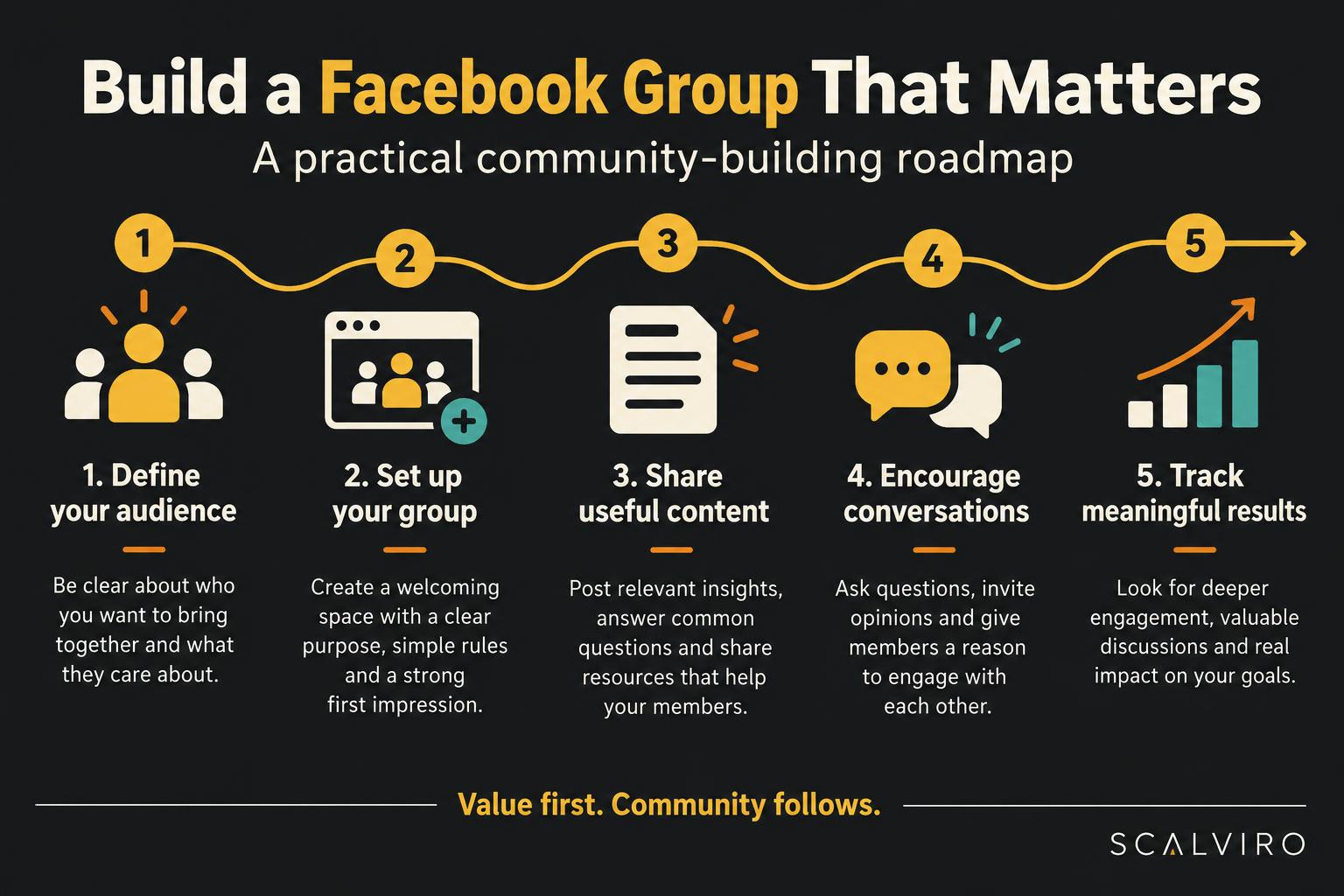
1. Define Your Facebook Group's Purpose
Before creating a Group, decide who it is for and what members will gain by joining.
A Group without a clear purpose can struggle to attract relevant members or maintain engagement. People need a compelling reason to participate.
Start by answering three questions:
- Who is your ideal member?
- What problem will your Group help solve?
- What exclusive value will members receive?
For example, a web design business could create a community for entrepreneurs who want to improve their websites and landing pages.
The Group could offer website improvement tips, conversion optimization advice, design feedback and discussions about common website problems.
A clearly defined purpose makes it easier to create relevant content and attract members who are genuinely interested in your expertise.
2. Choose a Clear and Search-Friendly Group Name
Your Group name should communicate its main topic immediately.
Include relevant keywords naturally so potential members can understand what the community offers when they discover it through Facebook search or external recommendations.
For example, consider these Group name ideas:
- SEO Tips and Strategies for Beginners
- Small Business Digital Marketing Community
- WordPress Website Design and Optimization
- Facebook Ads Tips for Business Owners
- Ecommerce Growth and Marketing Strategies
Avoid names that are too generic or difficult to understand. A name such as "Business Community" does not explain what makes the Group useful.
A specific name helps set expectations and attracts people who are more likely to engage with the content.
3. Set Up Your Facebook Group Professionally
Once you've decided on the purpose and name, configure your Group to support your marketing goals.
Write a Clear Description
Explain what the Group is about, who should join and what members can expect.
For example:
"Join our community of small business owners and marketers to learn practical SEO, website optimization and digital marketing strategies. Share your questions, exchange ideas and discover actionable ways to improve your online presence."
Keep the description focused on member benefits rather than writing a lengthy promotional pitch.
Choose the Right Privacy Setting
Facebook generally offers public and private Group options, although available settings and visibility controls may vary.
A public Group can make its content discoverable to a broader audience. A private Group can provide members with a more controlled community environment.
Choose based on your goals. If you plan to share exclusive resources or facilitate discussions that require membership, a private Group may be appropriate.
Create a Professional Cover Image
Your cover image should communicate the Group's purpose and maintain a consistent visual identity.
Use a simple design with readable text and relevant visual elements. Avoid overcrowding the image with too many messages, icons or promotional offers.
Establish Community Rules
Clear rules help members understand acceptable behavior and reduce spam.
Your rules may cover:
- Respectful communication.
- Restrictions on unsolicited promotions.
- Requirements for relevant and helpful posts.
- Guidelines for sharing external links.
- Consequences for repeated spam or abusive behavior.
Set expectations early so members know how to contribute positively.
4. Create Valuable Content Consistently
A Facebook Group needs useful content and active discussions to remain relevant.
Instead of publishing sales messages every day, focus on the questions, challenges and interests of your target audience.
Consider these content formats:
Educational Posts
Share practical advice that members can apply immediately.
For an SEO community, this might include keyword research techniques, on-page SEO checklists, internal linking tips or explanations of common technical SEO issues.
Questions and Polls
Ask members about their experiences and challenges.
For example:
"What is your biggest challenge with Google Ads right now: high CPC, low conversion rates or poor lead quality?"
Questions encourage participation and can reveal useful insights about your audience.
Case Studies
Share examples of marketing experiments, website improvements or campaign lessons.
Explain the problem, the actions taken and the observed results. Avoid presenting individual results as guarantees of future performance.
Live Sessions and Tutorials
Consider hosting live discussions, demonstrations or question-and-answer sessions.
These formats can help members understand complex topics and interact directly with your team.
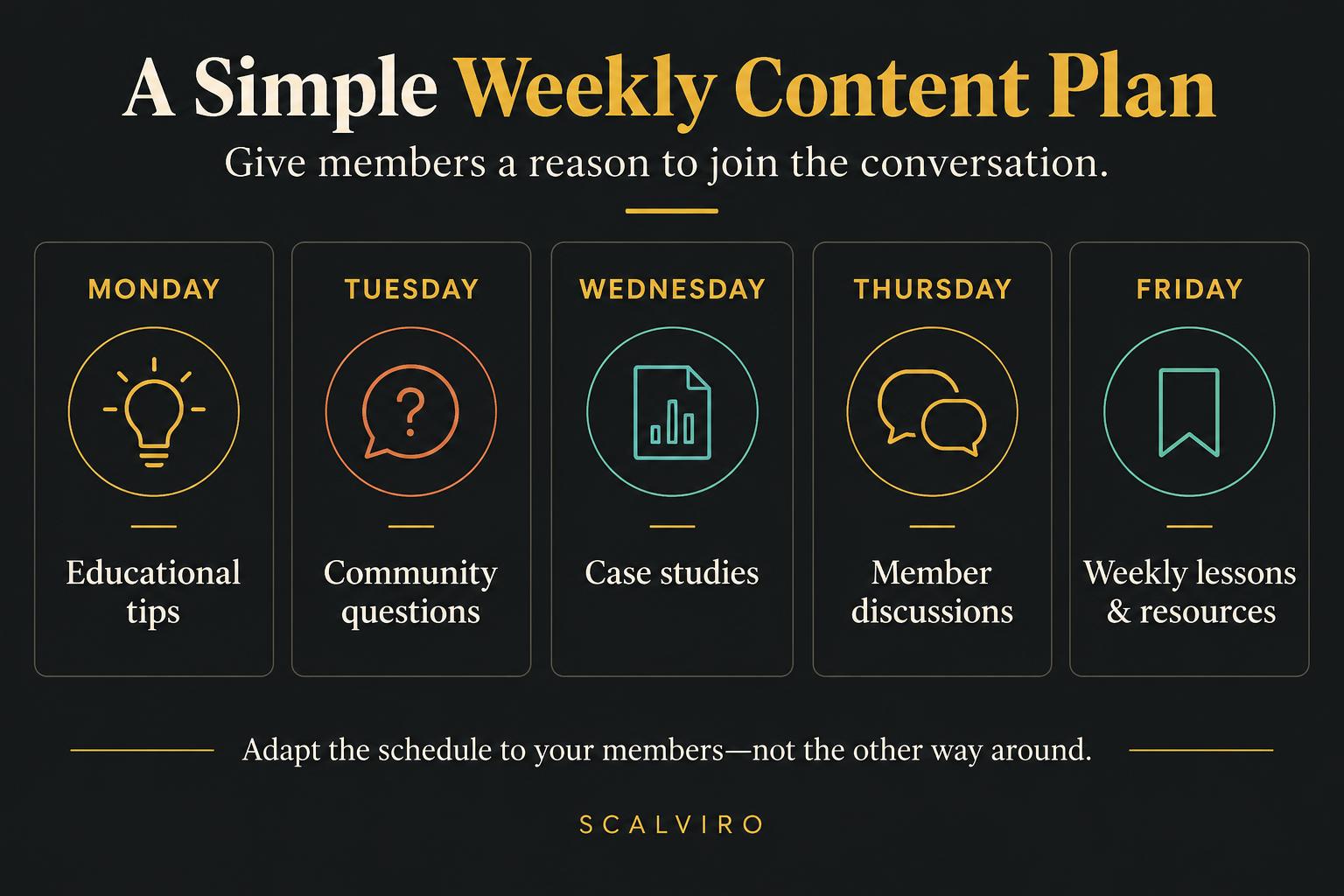
Weekly Content Themes
A simple content calendar can make Group management easier.
For example:
- Monday: Educational tips.
- Tuesday: Community questions.
- Wednesday: Case studies.
- Thursday: Member discussions.
- Friday: Weekly lessons and useful resources.
Treat this schedule as a starting point rather than a rigid rule. Adjust posting frequency according to member activity and the quality of discussions.
5. Grow Your Facebook Group Organically
Organic growth helps attract members without depending entirely on paid advertising.
The goal is to reach people who are genuinely interested in your topic rather than simply increasing the membership count.
Promote Your Group on Your Facebook Page
If your business already has a Facebook Page, introduce your Group to relevant followers.
Explain what makes the community useful and why someone should join.
For example, instead of posting only "Join our Facebook Group," share a specific benefit such as access to website optimization discussions or practical marketing resources.
Avoid promoting the Group so frequently that it overwhelms your regular Page content.
Share the Group With Your Email Audience
If you have an email list, invite subscribers who are interested in the Group's subject.
Explain what members can learn, which discussions they can participate in and how the community complements your existing content.
An audience that already knows your business may be more willing to participate than people who have never encountered your brand.
Participate in Relevant Facebook Groups
Find established communities where your ideal audience already participates.
Contribute useful answers, share relevant insights and follow each Group's promotion rules.
Do not repeatedly post your Group link without context. This can appear spammy and may violate community guidelines.
When appropriate, contact Group administrators to discuss mutually beneficial collaboration.
Promote Your Group on Other Platforms
Your potential members may also use LinkedIn, Instagram, YouTube or your website.
Mention your Facebook Group where it naturally complements the content you publish on these channels.
For example, a website design tutorial could invite interested readers to join a community where they can ask questions and discuss related challenges.
6. Use Facebook Ads to Attract Relevant Members
Paid advertising can help introduce your Group to people who may not discover it organically.
Before spending money, make sure your Group has a clear purpose, a professional appearance and enough useful content to demonstrate its value.
Depending on current Ads Manager options, you may be able to use relevant awareness or engagement campaigns to promote your community or its associated Page.
Define Your Audience
Start with a clear understanding of the people you want to attract.
For a Group focused on digital marketing, your audience might include small business owners, ecommerce operators or marketing professionals.
Use available targeting options and creative testing to identify audiences that produce relevant membership and engagement.
Create Benefit-Focused Ad Creatives
Your ad should explain why joining the Group is worthwhile.
For example, a creative might highlight practical SEO tips, website feedback or weekly digital marketing discussions.
Use simple visuals and a clear message. Avoid promising guaranteed business growth or unrealistic results.
Measure More Than Membership Growth
A campaign that attracts many members may not create an active community.
Monitor the cost of attracting members alongside participation, discussion quality and relevant business outcomes.
The best approach is to optimize for a community that contributes to your goals rather than the lowest possible cost per member.
7. Encourage Members to Participate
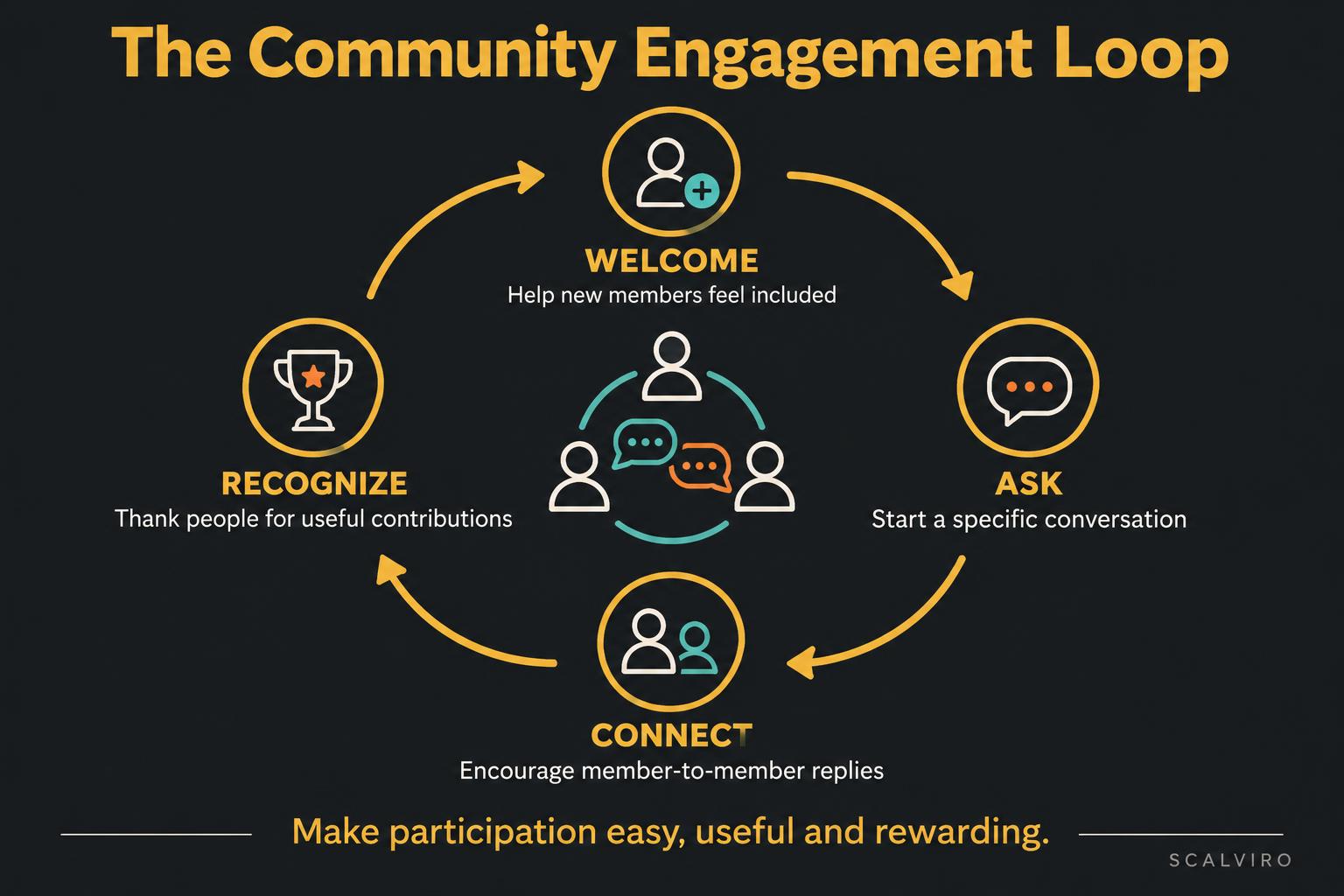
Attracting members is only half the challenge. You also need to make participation easy and rewarding.
New members may hesitate to post if they do not know anyone or are unsure what to share.
Use simple tactics to help them get involved.
Welcome New Members
Publish a welcome post that introduces the Group and explains how members can participate.
Invite newcomers to share their interests or describe a challenge related to the community's topic.
Ask Specific Questions
Questions that invite practical answers generally provide more direction than vague prompts.
For example, instead of asking "What do you think about SEO?" ask "Which SEO task takes the most time when optimizing a new website?"
Specific questions give members a clear starting point.
Recognize Helpful Contributions
Thank members who share useful advice, thoughtful questions or relevant experiences.
Recognition can encourage continued participation and help establish a supportive community culture.
Encourage Member-to-Member Discussions
A successful Group should not depend entirely on the administrator creating every conversation.
Invite members to share their own experiences, answer questions and learn from one another.
Your role is to facilitate useful discussions, maintain standards and contribute expertise when it adds value.
8. Generate Leads From Your Facebook Group
Facebook Groups can support lead generation when the community attracts people who genuinely need your products or services.
However, constantly promoting your business can damage trust and reduce participation.
Focus on understanding member needs and presenting relevant solutions at appropriate times.
Identify Potential Customers
Pay attention to questions, challenges and recurring problems shared by members.
For example, a member asking repeatedly about landing page conversion rates may be interested in website optimization services.
Use these conversations to understand their needs rather than assuming every active member is ready to buy.
Share Relevant Resources
Provide useful resources such as checklists, templates, tutorials or educational guides.
These materials can help members solve problems while demonstrating your expertise.
If you offer a related service, explain how it can help without suggesting that every member needs to purchase it.
Offer Consultations or Audits
When appropriate, invite interested members to request a consultation, website audit or service assessment.
Make the next step clear and avoid pressuring members who are only looking for information.
Follow Up Respectfully
If someone expresses interest in your service, continue the conversation in the way they prefer.
Avoid unsolicited mass messaging or repeatedly contacting members who have not expressed interest.
The goal is to build genuine business relationships, not turn every community interaction into a sales pitch.
9. Monetize Your Facebook Group
Once your community has consistent engagement and a clear audience, you can explore monetization opportunities.
The most suitable model depends on your expertise, the needs of your members and the type of value you can provide.
Sell Your Services
Consultants, freelancers and agencies can use Groups to demonstrate expertise and connect with potential clients.
For example, a digital marketer might provide educational content about SEO and Google Ads while offering professional services to businesses that need additional support.
Sell Digital Products
You can create and sell ebooks, templates, guides, workshops or online courses related to your Group's subject.
Make sure your products solve real problems and offer value beyond what members already receive for free.
Introduce Affiliate Recommendations
Recommend relevant products or tools that genuinely help members.
Disclose affiliate relationships clearly and avoid promoting products solely because they offer commissions.
Offer Paid Memberships
If members want more specialized support, you could offer a paid community, premium educational resources or expert sessions.
Before introducing a paid tier, validate whether there is sufficient demand for the additional value.
Explore Brand Partnerships
Established communities with a relevant audience may attract sponsorship opportunities.
Evaluate potential partnerships carefully to ensure that sponsored content aligns with your community's purpose and does not undermine member trust.
Remember that monetization works best when members already recognize the Group as a valuable resource.
10. Track Your Facebook Group's Performance
Membership growth is useful, but it does not tell the whole story.
A Group with fewer active members may generate more meaningful discussions and qualified leads than a much larger but inactive community.
Where available, use Facebook Group Insights and your own business tracking to evaluate performance.
Focus on these metrics:
| Metric | What it tells you |
|---|---|
| Member growth | Whether the community is attracting new people |
| Active members | How many members participate |
| Post engagement | Whether content encourages reactions and discussions |
| Comments and replies | Whether conversations are developing |
| Membership quality | Whether new members match your target audience |
| Qualified leads | Whether the Group contributes to business opportunities |
| Sales and revenue | Whether community activity supports commercial results |
Review performance regularly and identify which content formats generate meaningful participation.
Use those insights to improve your content calendar, refine your promotion strategy and make the community more useful to members.
Common Facebook Group Marketing Mistakes to Avoid
Several mistakes can prevent a Group from developing into a healthy community.
Focusing only on member count: Large membership numbers are not a substitute for meaningful participation.
Publishing too much promotional content: Constant selling can make members feel that the Group exists only to advertise products.
Ignoring member questions: Unanswered questions can discourage people from contributing again.
Allowing spam to accumulate: Poor moderation reduces the quality of discussions and makes the Group less appealing.
Using an unclear topic: A Group that covers too many unrelated subjects can struggle to attract a consistent audience.
Expecting instant results: Community growth and trust take time. Consistent effort is more sustainable than relying on one promotional campaign.
Avoiding these mistakes helps create a community that members want to return to.
Frequently Asked Questions
Conclusion
Creating and growing a Facebook Group can help your business develop a community around its expertise, build stronger customer relationships and discover new opportunities for growth.
Success begins with a clear purpose and the right audience. From there, focus on useful content, organic promotion, consistent moderation and meaningful conversations.
As the community develops, you can introduce relevant services, digital products or other monetization opportunities without compromising the value members receive.
Most importantly, measure the quality of engagement and the business outcomes your Group generates rather than focusing exclusively on membership numbers.
A well-managed Facebook Group is more than a collection of members. It is a community where people exchange knowledge, build trust and develop lasting relationships with your brand.

About the author
Ayesh Zubair
Founder of Scalviro · Digital Marketer
Ayesh Zubair is the founder of Scalviro, providing SEO, Google Ads and Meta Ads management. He writes about search visibility, paid advertising and digital marketing strategies for businesses.